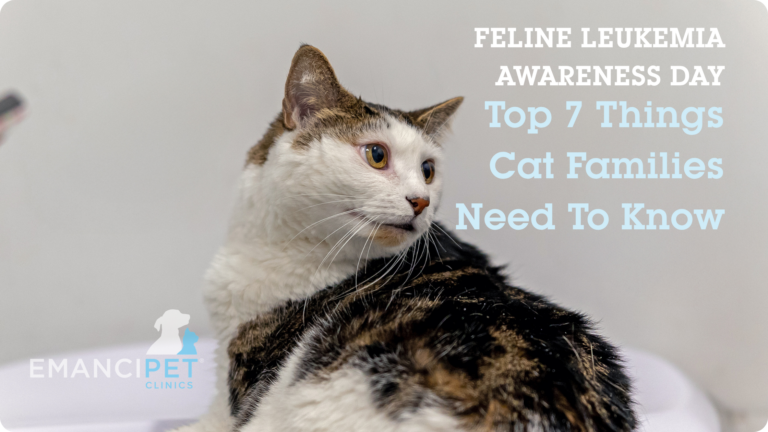
July 15 is Feline Leukemia Awareness Day, dedicated to spreading the word about this serious, but often preventable virus that compromises cats’ immune systems. Our veterinarians at Emancipet put together a list of the top things families with cats need to know about FeLV.
1. Feline Leukemia (sometimes abbreviated FeLV) is a viral disease that can cause significant illness in cats, including potentially fatal cancer.
Because it is a retrovirus, once a cat is infected, they will remain infected for life. Between 2-3% of all cats in the United States and Canada are positive for FeLV.
2. Feline leukemia is transmitted mostly through saliva.
This means that cats sharing food and water dishes, litterboxes, or even just grooming/licking an FeLV positive cat can be exposed and infected.
3. FeLV testing can be done with just a few drops of your cat’s blood.
Further testing may be recommended if your cat is positive to confirm the infection as false-positive tests can occur.
You can also walk in at any Emancipet location.
Please note that Emancipet services are intended for healthy animals only—if your cat is showing signs of illness you will need to make an appointment at a general practice veterinarian for testing.
4. There are three forms of infection: abortive, regressive and progressive.
Abortive Infections
Abortive infections happen when a cat successfully eliminates the virus before it becomes incorporated into their DNA. These cats have the best prognosis. They may never test positive for FeLV, or they may test positive at one point and then become negative later.
Regressive Infections
Regressive infections happen when a cat successfully eliminates the virus from the bloodstream, even if it managed to incorporate into their DNA. The virus lays “dormant” but may reactivate and lead to transmission to other cats. These cats may live a relatively normal life, although their lifespan might be cut short if the disease reactivates.
Progressive Infections
Progressive infections happen when the virus is constantly replicating in a cat’s bone marrow and being carried in their bloodstream. This lowers a cat’s ability to fight of other infections, such as simple respiratory infections. They are the most likely to be contagious to other cats and have a significantly shorter lifespan than non-infected cats.
5. There is no cure for FeLV, so prevention is key!
The best way to prevent FeLV infection is to isolate infected cats so they cannot be in contact with uninfected cats.
6. Vaccines for FeLV are generally 83-93% effective at preventing transmission.
The Feline Veterinary Medical Association recommends this vaccine for all because kittens are at a higher risk for developing progressive infections. Continued vaccination is recommended for outdoor or otherwise at-risk cats.
Interested in getting your cat vaccinated? Book online or walk into any Emancipet Clinic for Healthy Pet Services!
7. FeLV is not the same thing as FIV!
FIV, or Feline Immunodeficiency Virus, is a completely different retrovirus with different prognosis and clinical signs, although they are often screened for in the same test.
We’re Here to Help
Emancipet is here to help keep cats healthy, happy and at home with their families.