Summertime means longer days, hotter weather, and more time for fun in the sun. National Pet Hydration Awareness Month happens every July to help educate dog owners on the importance of keeping pets hydrated during one of the hottest times of the year. Knowing the risks of dehydration helps make sure that the summer heat won’t stand in the way of a good time.
Why is Hydration Important?
Pets have similar needs to people, especially when it comes to risks in the hot summer weather. However, unlike humans, cats and dogs don’t sweat the same way we do or have the ability to vocalize when they’re too hot. If pets aren’t getting enough water intake, especially in periods of intense heat, they run the risk of experiencing dehydration, heat exhaustion, and even heat stroke, which can be fatal.
How the Heat Impacts Your Pet
On normal days, a dog should drink about 1 ounce of water daily for every pound that they weigh and a cat should drink about 3.5-4.5 ounces of water daily for every 5 pounds of body weight. This means that a 10 pound dog should drink at least 10 ounces of water a day while a 10 pound cat should drink about 7-9 ounces. If your pet eats canned food, they are getting some of their water from there and may not need to drink as much—especially cats.
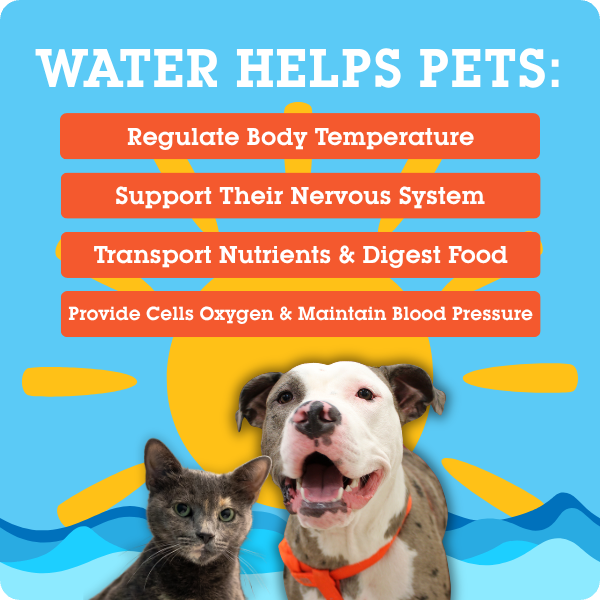
However, once the heat is turned up and pets are playing and running in the sun, they need access to more water to help them:
- Regulate their body temperature
- Support their nervous system
- Transporting nutrients and digesting their food
- Provide oxygen to cells and maintain blood pressure
Dehydration becomes a more common and dangerous possibility in the hot summer weather because your pet loses water trying to stay cool. This means that access to clean, cool water is essential and may be needed more often than usual.
What Symptoms to Look Out For
Pets may not be able to verbally tell you when they are feeling dehydrated, however there are symptoms that both humans and pets share that can help you understand when your pets are needing extra attention.
Signs of dehydration include:
- Extreme thirst
- Lethargy
- Sunken eyes
- Dry or tacky gums
- Thick saliva
- Decreased appetite
- Vomiting
If your dog or cat seems mildly dehydrated but is not vomiting, give your pet small amounts of water, frequently over the course of a few hours.
Avoid letting your pet drink the water too fast! This can cause your pet to vomit and lead to more dehydration. Help them cool down by encouraging them to drink small amounts of water slowly and monitor them closely.
If you think your pet may be very dehydrated, take them to an emergency vet or your full-service veterinarian right away.
Tips to Beat the Heat for a Hydrated, Happy Summer
Dehydration can happen quickly, so staying safe requires understanding when it’s too hot to be exposed to the sun and recognizing the best ways to keep your pets safe. Keep your pets healthy and happy all summer long by:
- When temperatures start getting warmer, don’t leave your pets outside unattended. Each pet’s tolerance for heat is different, and can also depend on other factors like humidity and whether they drank enough water that morning, etc.
- Provide your pets with ample shade and fresh water. Dog houses can retain heat and humidity, so check for airflow wherever your dog is hanging out.Refreshing their water multiple times throughout the day can make it more appealing and encourage them to drink.
- Save walks for early mornings and late evenings when the sun’s rays are less intense. Taking a few shorter walks instead of one very long walk might also help your pet maintain their temperature and hydration.
- Provide shallow water or small kiddie pools (supervised!) for hot summer days.
- Hot pavement can burn your pet’s paws! Check the pavement before walks or adventures outside.
- Avoid intense exercise with your pets in the heat. Try replacing long walks with swimming or playing in sprinklers to get your pet’s energy out without risking overheating. You can also look up enrichment games to play inside the house when the weather is too hot.
- Don’t leave your pets in vehicles unattended, even while running. When outdoor temperatures reach the mid-70’s, cars can quickly reach temperatures higher than 100 degrees fahrenheit in the sun, and even if the car is running the air conditioning might not be able to keep up.
These rules are even more important for pets with short snouts such as bulldogs! These pets have a lower tolerance for the heat than the breeds with longer noses because they cannot pant as efficiently to cool off.
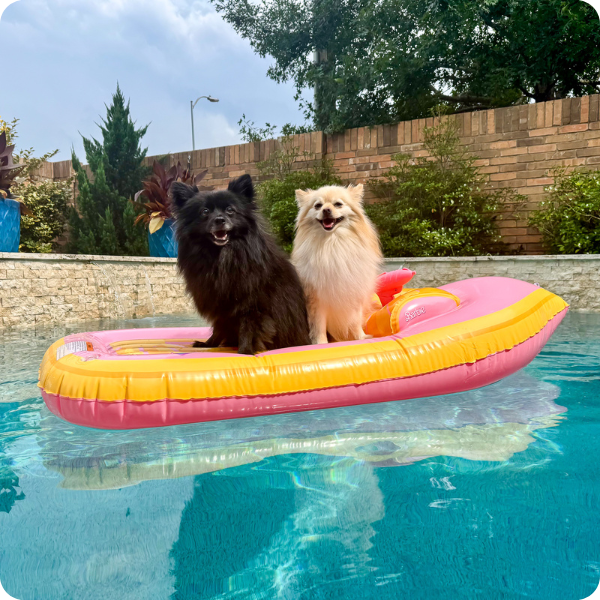
Follow these guidelines to help your pets stay happy, healthy, and hydrated all summer long.
Learn more about Emancipet’s services and find a clinic near you. Appointments and online booking is available!